

As AI workloads, cloud computing, and global connectivity scale at unprecedented speed, data centers have moved to the center of enterprise sustainability and regulatory scrutiny. Treating energy efficiency as an optional corporate social responsibility initiative is no longer viable. Facility operators, cloud architects, and enterprise leaders need an auditable, engineering-driven framework that turns sustainability pledges into measurable operational performance.
The International Federation of Global & Green Information and Communication Technology (IFGICT) addresses this gap through its Green Data Center Standards, uniting global treaty-level benchmarks with practical, ground-level facility governance.
Why Data Center Standardization Matters Now
Without a unified standard, sustainability reporting across digital infrastructure often suffers from inconsistent baselines and fragmented engineering. Adherence to the IFGICT framework solves four persistent operational challenges:
- Eliminating Metric Ambiguity: Rather than relying on seasonal snapshots or uncalibrated meters, standardized telemetry enforces continuous, annualized, boundary-defined reporting for Power Usage Effectiveness (PUE) and related resource metrics.
- Preventing Over-Provisioning: Monolithic builds frequently leave uninterruptible power supplies (UPS) and chillers running at 20% to 30% partial load, where electrical and mechanical efficiency drops sharply. Modular standardization aligns capital expenditure with actual IT demand.
- Enabling AI-Driven Operations: Legacy building management systems struggle to react to rapid compute spikes. Modern standards incorporate machine learning and big data analytics to optimize cooling and power distribution dynamically.
- Ensuring ESG and Regulatory Auditability: Financial regulators, enterprise procurement teams, and sovereign cloud mandates increasingly require third-party verification that sustainability claims can withstand rigorous audits.
Institutional Authority: UN, IEEE, and ITU-T Alignment
What sets the IFGICT Green ICT Standard apart from proprietary vendor badges is its alignment with leading international institutions:
- United Nations Alignment: Approved and listed within UN sustainability and ICT ecosystems, IFGICT maps data center criteria directly to the UN Sustainable Development Goals—specifically SDG 7 (Affordable and Clean Energy), SDG 9 (Industry, Innovation, and Infrastructure), SDG 12 (Responsible Consumption and Production), and SDG 13 (Climate Action).
- IEEE Partnership: Through collaboration with the Institute of Electrical and Electronics Engineers (IEEE), IFGICT grounds its power quality, electrical engineering, grid interactivity, and high-density thermal guidelines in peer-reviewed technical rigor.
- ITU-T and ISO Integration: IFGICT synthesizes normative International Telecommunication Union (ITU-T) recommendations with the ISO management ecosystem so organizations can operate under one cohesive compliance architecture.
Core Pillars of the IFGICT Data Center Framework
A compliant data center under IFGICT integrates both physical engineering and continuous management governance across five core pillars:
- Governance and Energy Management (ITU-T L.1300 & ISO 50001): Executive-approved Green ICT policies backed by cross-functional IT and facilities committees that review capacity, thermal, and power KPIs through a Plan-Do-Check-Act (PDCA) cycle.
- Revenue-Grade Metering and KPIs (ITU-T L.1302 & ISO/IEC 30134): Sub-metering installed across utility mains, UPS outputs, mechanical cooling plants, and rack power distribution units (PDUs) to track PUE, water usage, renewable energy share, and server utilization accurately.
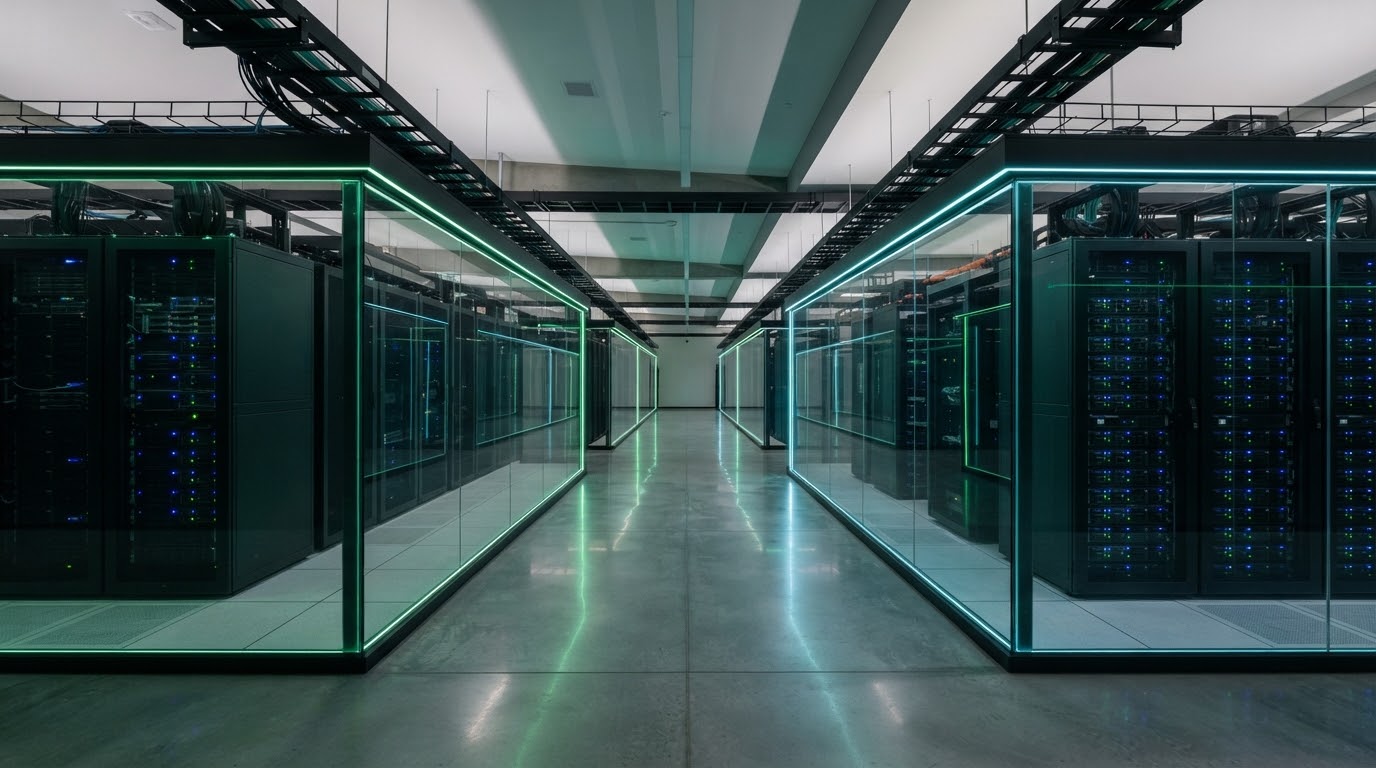
- Cooling and Airflow Optimization (ITU-T L.1300): Full deployment of hot-aisle or cold-aisle containment across active server halls, paired with advanced cooling technologies and virtualization to eliminate stranded capacity.
- AI-Driven DCIM and Cybersecurity (ITU-T L.1305 & ISO/IEC 27001): Predictive Data Center Infrastructure Management (DCIM) systems that dynamically balance thermal and electrical loads while safeguarding automation controls against cyber and operational risks.
- Environmental Lifecycle and Carbon Accounting (ISO 14001): Facility-wide controls covering refrigerant management, hazardous battery disposal, responsible e-waste recycling, and transparent Scope 1, 2, and 3 emissions tracking.
The Path to IFGICT Certification
Achieving certification under the IFGICT Data Centers Standard follows a structured, objective five-stage audit process:
- Scoping: Defining organizational boundaries, asset inventories, and stakeholder alignment.
- Field Inspection: Conducting on-site reviews of active infrastructure, PUE baselines, energy telemetry, and operational policies.
- Gap Analysis: Benchmarking current facility performance against IFGICT, ISO, and ITU-T requirements to identify efficiency leaks and compliance risks.
- Corrective Action Roadmap: Implementing targeted engineering, governance, and hardware lifecycle improvements to close identified gaps.
- Certification: Issuing the official IFGICT compliance seal and public validation registry listing, backed by ongoing periodic reviews.
By adopting the IFGICT Data Centers Standard, organizations do more than lower utility costs and reduce their carbon footprint—they build resilient, audit-ready digital infrastructure engineered for the next decade of global growth.