

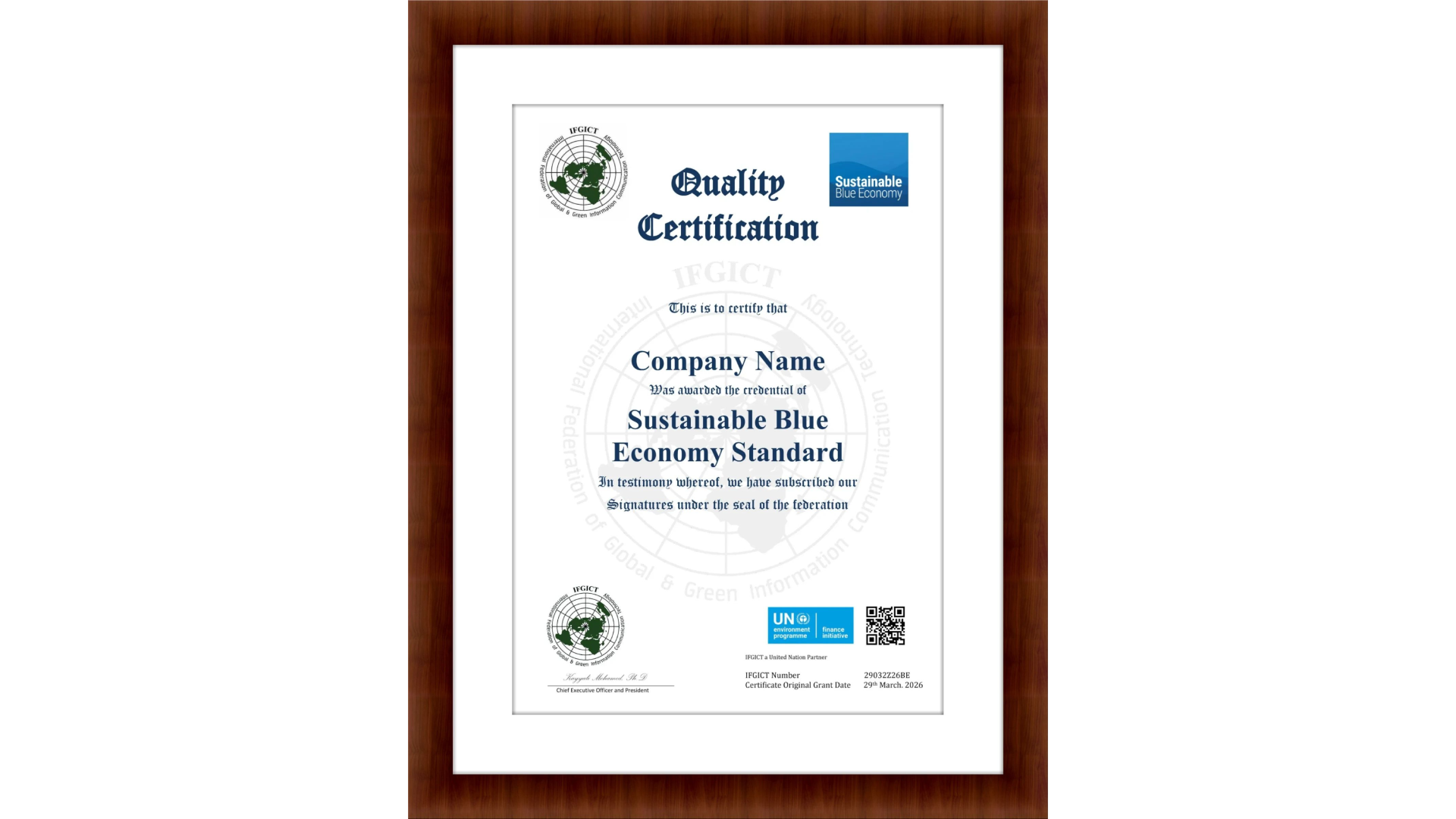
The global shift toward environmental responsibility is no longer a peripheral concern for corporations; it is the core of modern industrial strategy. At the forefront of this transformation is the IFGICT, providing the essential SDG Sustainability Standards Certification that enables organizations to align with the United Nations Sustainable Development Goals (SDGs).
As digital infrastructure expands, the carbon footprint of the Information and Communication Technology (ICT) sector has come under intense scrutiny. To manage this, a robust SDG Sustainability Standards Certification is required to bridge the gap between technological advancement and ecological preservation.
Why SDG Sustainability Standards Certification is Essential for Modern Enterprise
In an era defined by climate volatility, the term “Sustainability” has evolved from a buzzword into a measurable financial metric. The SDG Sustainability Standards Certification offered by IFGICT serves as a rigorous framework for validating an organization’s commitment to the planet.
Understanding the Role of the SDG Standard Certification
The SDG standard certification is more than just a badge of honor; it is a comprehensive audit of an organization’s operational impact. By adhering to these benchmarks, companies ensure they are contributing to specific UN goals, such as affordable and clean energy (Goal 7) and responsible consumption and production (Goal 12).
The Integration of ESG Standard Requirements
Environmental, Social, and Governance (ESG) criteria have become the primary lens through which investors evaluate risk. An ESG standard ensures that a company is transparent about its carbon emissions, labor practices, and board diversity. When combined with the SDG Sustainability Standards Certification, it provides a 360-degree view of corporate health.
IFGICT: Leading the Way in Green ICT and Sustainability
The International Federation of Global & Green ICT (IFGICT) has established itself as the world leader in ICT standardization. By focusing on “Green IT,” the federation helps businesses reduce e-waste and optimize energy consumption through the SDG Sustainability Standards Certification.
Professional Validation through IFGICT
For professionals looking to lead these initiatives, IFGICT offers specialized pathways. These programs ensure that Chief Sustainability Officers (CSOs) and IT Managers have the technical expertise to implement the SDG Sustainability Standards Certification across complex global supply chains.
Global Impact and Recognition
Operating across continents, IFGICT works with governments and private entities to harmonize ICT policies. Their role in promoting the SDG Sustainability Standards Certification has made them a cornerstone of the international effort to reach Net Zero emissions by 2050.
Exploring the Blue Economy: Frameworks and Standards
While much of the sustainability conversation focuses on land-based industries, the “Blue Economy” represents the next frontier of environmental stewardship. IFGICT has pioneered a blue economy framework to address the sustainable use of ocean resources for economic growth.
What is the Blue Economy?
The blue economy encompasses all economic activities related to oceans, seas, and coasts. From sustainable fisheries to renewable marine energy, this sector requires a specific blue economy standard to prevent overexploitation and habitat destruction.
Implementing a Blue Economy Standard
Just as the SDG Sustainability Standards Certification governs digital and industrial sectors, a blue economy standard provides the metrics needed to protect marine ecosystems. IFGICT provides the tools for maritime organizations to certify their operations against these vital ecological benchmarks.
The Strategic Benefits of SDG Sustainability Standards Certification
Adopting the SDG Sustainability Standards Certification is a strategic move that yields long-term dividends. Organizations that prioritize the SDG standard certification often see improved efficiency and increased brand loyalty.
- Operational Efficiency: Reducing energy waste directly lowers utility costs.
- Regulatory Compliance: As governments introduce stricter environmental laws, having an SDG Sustainability Standards Certification ensures you stay ahead of the curve.
- Market Access: Many Tier-1 vendors now require their partners to hold a recognized ESG standard or SDG Sustainability Standards Certification.
- Investor Confidence: Ethical investing is at an all-time high; certification provides the data investors need to commit capital.
How to Achieve IFGICT Certification
The process of obtaining the SDG Sustainability Standards Certification is designed to be thorough yet accessible for forward-thinking enterprises.
Step 1: Initial Assessment
The first phase involves a gap analysis to see where your organization currently stands in relation to the SDG standard certification requirements.
Step 2: Implementation of the Framework
Organizations must integrate the ESG standard and, if applicable, the blue economy framework into their daily operations. This may involve upgrading hardware, switching to renewable energy sources, or revising procurement policies.
Step 3: Verification and Award
Once the internal changes are made, IFGICT auditors verify compliance. Upon successful completion, the organization is awarded the SDG Sustainability Standards Certification.
Contact and Support
For organizations ready to take the next step in their sustainability journey, the IFGICT support team is available to provide guidance on the SDG Sustainability Standards Certification.
- Official Website: www.ifgict.org
- Support Email: [email protected]
Frequently Asked Questions (FAQ)
What is the SDG Sustainability Standards Certification?
The SDG Sustainability Standards Certification is a globally recognized program administered by IFGICT. It verifies that an organization’s ICT and operational processes align with the United Nations Sustainable Development Goals.
Is IFGICT a UN Partner?
Yes, IFGICT is a recognized partner in promoting the Sustainable Development Goals, specifically focusing on how ICT can accelerate the achievement of these targets through the SDG Sustainability Standards Certification.
What is the difference between an ESG standard and an SDG standard?
An ESG standard focuses on the internal governance and risk management of a company (Environmental, Social, and Governance), while an SDG standard (and the resulting SDG Sustainability Standards Certification) focuses on the external impact and contribution a company makes toward global sustainability targets.
Why is the blue economy framework important?
The blue economy framework is essential because it provides a roadmap for the sustainable development of marine-based industries. Without a dedicated blue economy standard, ocean resources face the risk of permanent depletion.
How long does it take to get the SDG Sustainability Standards Certification?
The timeline varies depending on the size of the organization and its current level of compliance. However, IFGICT aims to make the SDG Sustainability Standards Certification process as streamlined as possible to encourage widespread adoption.
Final Thoughts on Global Sustainability
The transition to a green economy is the defining challenge of our generation. By adopting the SDG Sustainability Standards Certification, businesses are not just protecting the environment—they are ensuring their own relevance in a rapidly changing world. With the leadership of IFGICT, the path to a sustainable, ethical, and profitable future is clearer than ever.
For more information on how to begin your SDG Sustainability Standards Certification, visit IFGICT today.