

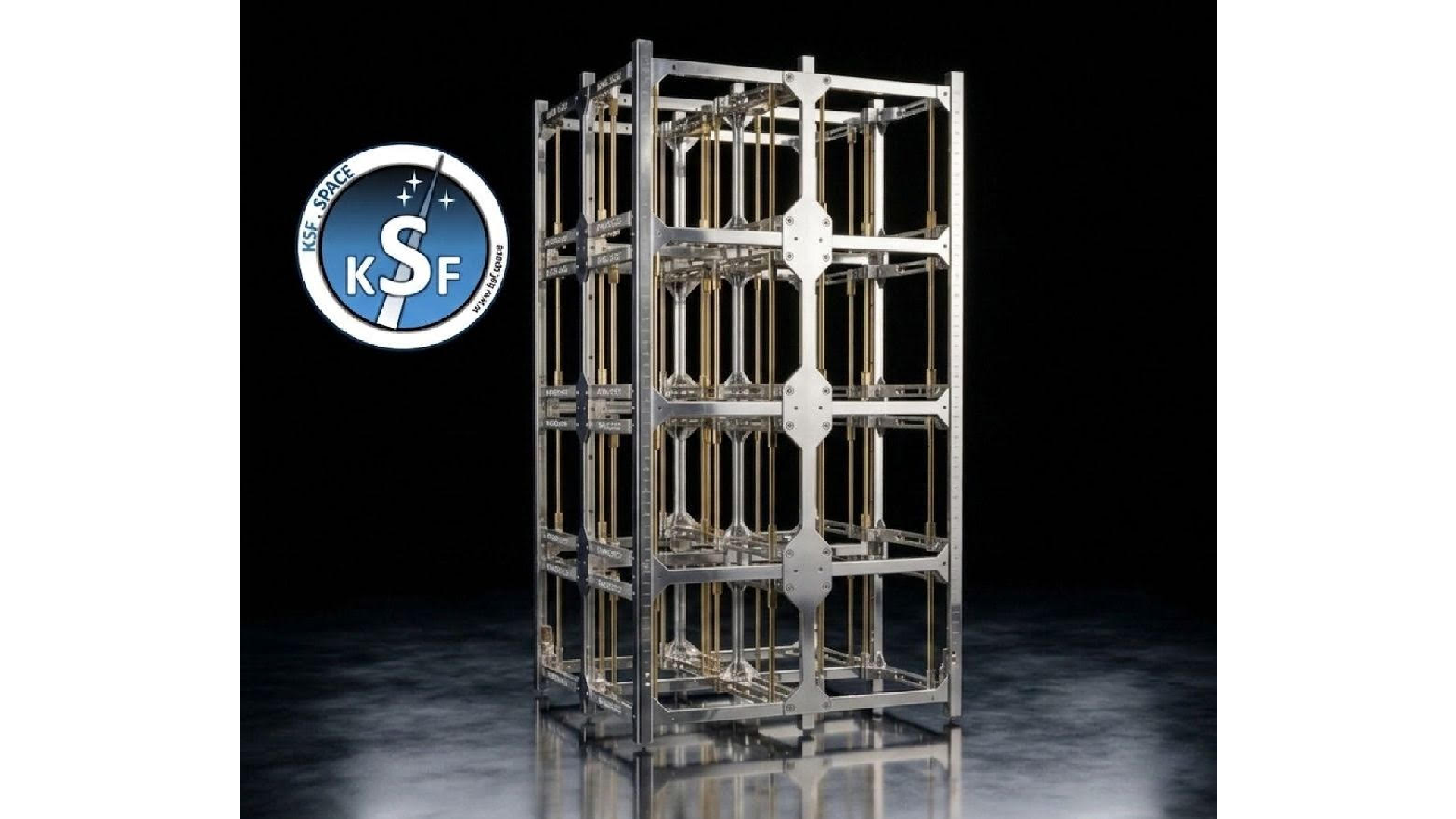
The landscape of space exploration has shifted. High-budget, decade-long missions are no longer the only way to reach orbit. Today, the “New Space” era is defined by agility, rapid prototyping, and cost-effective deployment. At the heart of this revolution is the need for reliable, high-quality hardware. Whether you are a university research team, a government agency, or a commercial startup, your mission’s success begins with the cubesat frame.
KSF Space stands at the forefront of this movement, offering a comprehensive suite of satellite bus solutions. From the standardized 1U to the specialized 16U cubesat structure, and extending into the realm of custom microsatellite frames, KSF Space provides the physical foundation for the next generation of orbital innovation.
Why Choosing the Right Cubesat Structure is Critical
A satellite structure is far more than just a metal box. It is a sophisticated piece of aerospace engineering designed to protect sensitive electronics from the violent vibrations of launch and the extreme thermal cycles of the space environment. When you build your satellite, the frame must meet strict “dispenser” requirements to ensure it can be safely ejected from the rocket.
The KSF Space Advantage: Customization and Flight Heritage
Many providers offer off-the-shelf components, but space missions are rarely one-size-fits-all. KSF Space differentiates itself by offering the ability to customize structure designs based on specific payload requirements. With years of flight references, these structures have been tested where it matters most: in the vacuum of space.
Exploring the Range: From 1U to 24U Cubesat Structure Options
The modularity of the CubeSat standard (where 1U equals a 10cm cube) allows for incredible scalability. KSF Space specializes in aluminum-grade structures that balance mass-efficiency with structural rigidity.
Standardized Nanosatellite Structure Frame Options
- 1U, 2U, and 3U: The classic configurations for educational and biological experiments. These compact frames are ideal for technology demonstrations.
- 6U and 12U: Stepping into the professional realm, these sizes allow for more advanced propulsion systems and high-resolution imaging sensors.
- 16U Cubesat Structure: A rising favorite for IoT (Internet of Things) constellations. The 16U cubesat structure offers a unique volume-to-mass ratio that bridges the gap between nanosatellites and larger platforms.
- 24U: The upper limit of the CubeSat standard, providing the power and space necessary for deep-space exploration or complex telecommunications.
Beyond the Cube: Microsatellite Size Structures
If your mission exceeds the 24U form factor, KSF Space provides the engineering expertise to build microsatellite structures. These platforms support larger solar arrays and more significant fuel loads, allowing for longer mission durations and higher orbital maneuvers.
How to Build a Satellite: A Step-by-Step Technical Guide
Building a satellite is a multidisciplinary feat. If you are looking to build your satellite, the process generally follows a standardized aerospace lifecycle:
1. Mission Design and Requirement Analysis
Define what you want to achieve. Is it Earth observation, weather monitoring, or scientific research? This will determine the size of your nanosatellite structure frame.
2. Choosing the Cubesat Frame
Select a frame that accommodates your PCB stacks and sensors. For many commercial missions, the 16U cubesat structure is the “sweet spot” for balancing cost and capability.
3. Integration and Testing (V&V)
Once the components are mounted within the cubesat structure, the satellite must undergo rigorous testing:
- Thermal Vacuum (TVAC): Simulating the heat and cold of space.
- Vibration Testing: Ensuring the frame can withstand the G-forces of launch.
- EMI/EMC: Checking for electromagnetic interference between subsystems.
4. Licensing and Launch Integration
Securing radio frequency licenses and finding a “rideshare” provider to take your KSF Space-powered mission to orbit.
How to Build Cubesat Structure Components for Durability
When we discuss how to build cubesat structure kits at KSF Space, we focus on high-grade Aluminum 6061 or 7075. These materials are chosen for their:
- Low Outgassing: Ensuring that materials don’t release gases that could coat lens optics in a vacuum.
- Thermal Conductivity: Helping to dissipate heat generated by the onboard computer.
- Precision Machining: Ensuring the outer rails are smooth enough to slide out of the deployer without snagging.
Future-Proof Your Mission with KSF Space
The “ready for your space mission” philosophy at KSF Space means that when you receive a cubesat frame, it is ready for immediate integration. By providing a flight-proven, customize structure service, KSF Space reduces the barrier to entry for space exploration.
Whether you need a 1U for a classroom project or a heavy-duty microsatellite frame for a national security mission, the engineering team at KSF Space ensures that your hardware is the least of your worries, letting you focus on the data that matters.
Frequently Asked Questions (FAQ)
What is the difference between a nanosatellite and a microsatellite?
A nanosatellite typically weighs between 1kg and 10kg (often following the CubeSat standard like 3U or 6U). A microsatellite is larger, typically weighing between 10kg and 100kg, allowing for more complex payloads.
Can KSF Space provide a 16U cubesat structure for commercial use?
Yes, KSF Space specializes in the 16U cubesat structure, providing a robust, flight-ready frame designed for high-performance commercial constellations.
How do I customize my satellite structure?
You can contact the engineering team at KSF Space with your specific dimensions, mounting requirements, and material preferences. We offer modular adjustments from 1U up to 24U.
Is the hardware flight-proven?
Absolutely. KSF Space has extensive flight references, meaning our structures have successfully performed in actual space missions.
What materials are used in a KSF Space cubesat frame?
Most structures are crafted from aerospace-grade aluminum, though we can customize structure materials based on specific thermal or radiation shielding needs.
References and Technical Resources
- The CubeSat Design Specification (CDS): The industry standard for 1U–12U designs.
- NASA State of the Art for Small Spacecraft Technology: Annual reports detailing the evolution of the nanosatellite structure frame.
- KSF Space Mission Archives: Detailed logs of previous successful deployments and flight references KSF Space.
- Journal of Small Satellites (JoSS): Peer-reviewed research on the structural integrity of microsatellite platforms.