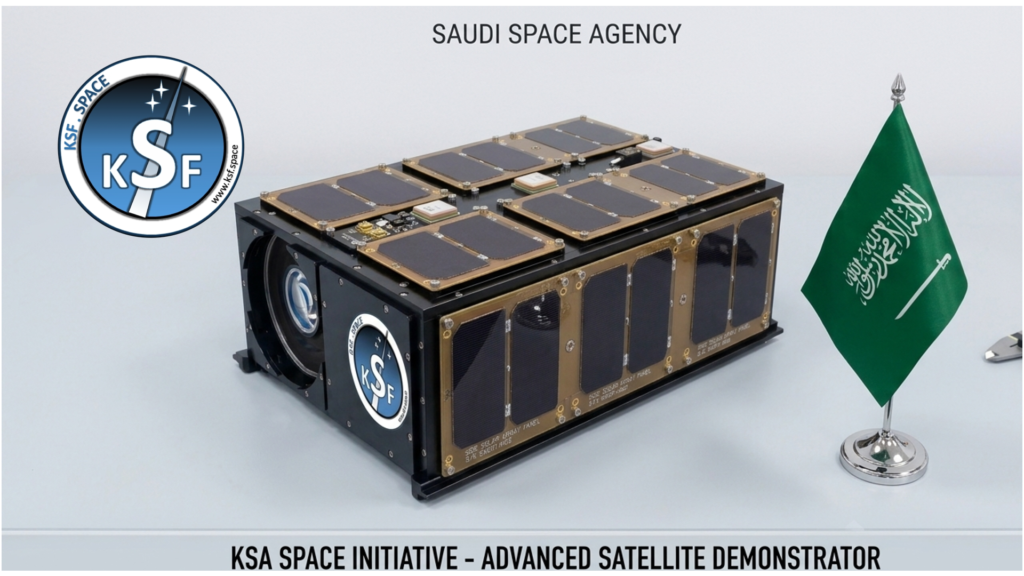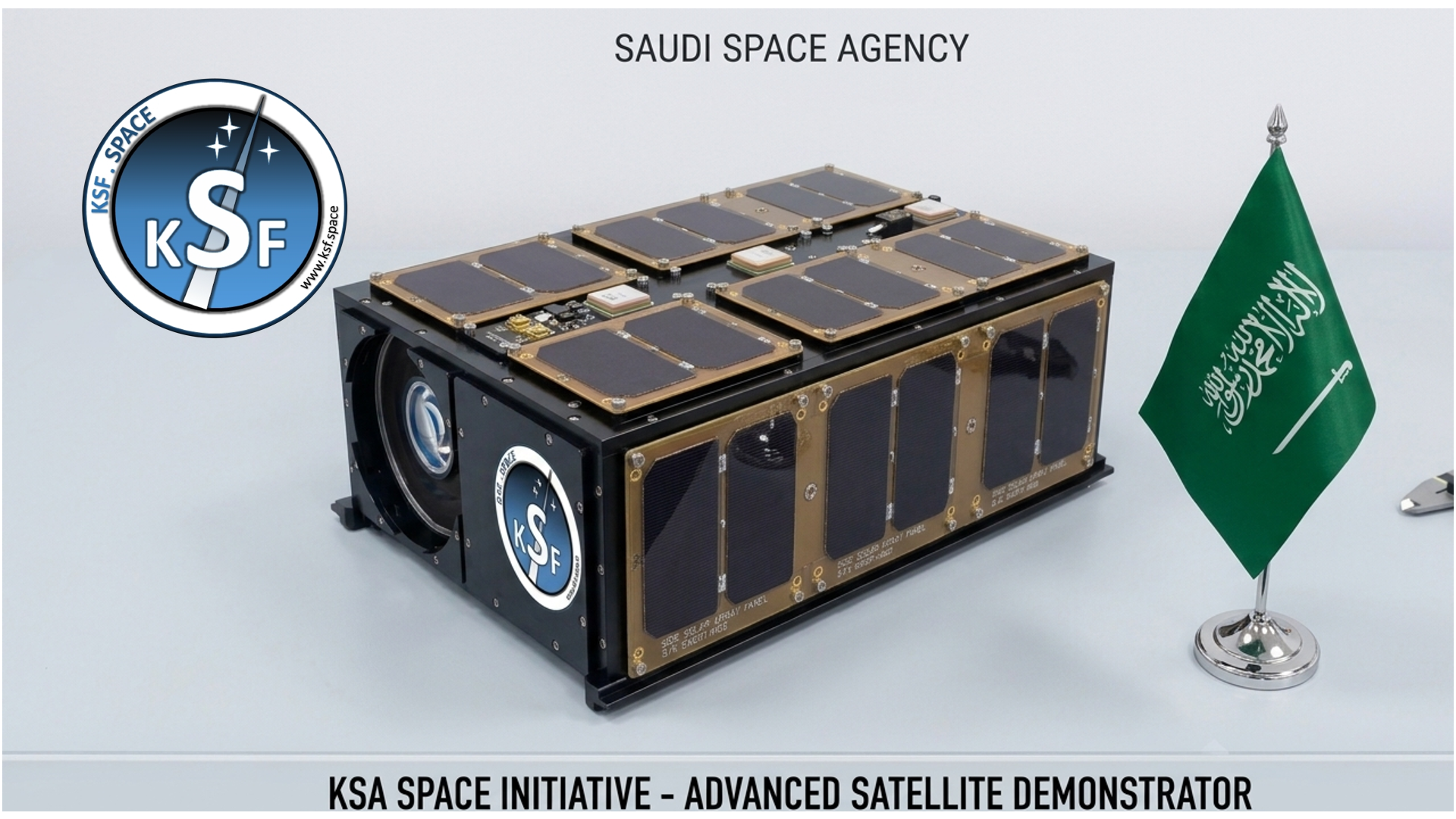
The global space economy is moving at escape velocity, shifting from the exclusive domain of multi-billion-dollar government agencies to a dynamic, modular ecosystem driven by miniaturized technology. At the absolute forefront of this transformation is the small satellite revolution. For the Kingdom of Saudi Arabia, this revolution aligns perfectly with the strategic imperatives of Vision 2030, which prioritizes technological localization, knowledge-based economic diversification, and the development of high-caliber local talent.
As the Saudi Space Agency continues to lay the groundwork for a robust national space ecosystem, academic institutions face an urgent mandate: transforming theoretical engineering into mission-ready, hands-on execution.
This is where KSF Space steps in. As a premier non-profit foundation steered by a global technical committee of elite aerospace experts, KSF Space is actively driving the democratization of orbital access. By providing flight-ready hardware, industry-standard testing methodologies, and globally recognized professional training, KSF Space is uniquely positioned to partner with any forward-thinking KSA University and Saudi University to lead STEM education and nanosatellite deployment.
Why Cubesat KSA is the Ultimate Catalyst for Saudi Vision 2030
The national space strategy of Saudi Arabia is not just about observing the cosmos; it is about building the industrial and intellectual infrastructure right here on the ground. Developing a dedicated Cubesat KSA framework offers an unparalleled, cost-effective pathway for academic institutions to design, build, test, and launch actual orbital hardware.
The Power of Modular Aerospace Engineering
A CubeSat is a miniaturized satellite built upon a standardized form factor of 10cm × 10cm × 10cm, designated as 1U. These units can be scaled up systematically into 3U, 6U, 12U, or even 24U configurations depending on payload requirements. By utilizing Commercial Off-The-Shelf (COTS) components inside a space-ready frame, a Cubesat Saudi Arabia initiative enables engineering departments to bypass the massive capital barriers associated with traditional legacy satellites.
Bridging the Academic Skills Gap
While typical aerospace or electrical engineering degrees focus heavily on abstract orbital mechanics and theoretical physics, a hands-on nanosatellite project demands comprehensive multi-disciplinary mastery. When a Saudi University implements a dedicated small satellite program, students are immediately forced to solve real-world problems involving:
- On-Board Computing (OBC): Developing low-power firmware in C++ or Python to handle system telemetry and command logic.
- Electrical Power Systems (EPS): Designing solar cell matrices and calculating precise battery discharge cycles under intense thermal stress.
- Attitude Determination and Control Systems (ADCS): Programming magnetorquers or reaction wheels to keep the satellite stabilized in low Earth orbit (LEO).
- Thermal and Radiation Shielding: Simulating survival protocols against the unforgiving environments of space where temperatures swing wildly between extreme heat and freezing shadows.
How KSF Space Partners with KSA Universities to Pioneer STEM Excellence
Building a successful satellite program requires more than buying components off the internet; it demands an institutional framework that ensures mission success and protects capital investments. KSF Space serves as the ultimate bridge between academic curiosity and orbital reality, offering custom-tailored support structures specifically designed for any progressive KSA University.
1. Flight-Ready Hardware and Advanced CubeSat DIY Kits
To facilitate immediate, hands-on learning without the initial high stakes of an active rocket launch, KSF Space provides state-of-the-art educational kits. These systems flawlessly mimic the architectural behavior of an operational orbital satellite.
Students can safely experiment with sensors, power distribution, and radio communication in a classroom environment. For advanced research groups aiming for true orbital insertion, KSF Space provides premium structural frames machined from industry-standard 6061-T6 aluminum, as well as pioneering bio-sourced PA11 polymers that reduce structural weight by up to 40% for advanced “Green Space” initiatives.
2. End-to-End Testing and Mission Assurance
The vacuum of LEO is entirely unforgiving. A single loose wire or unvetted software loop can instantly turn a university asset into space debris. KSF Space trains academic teams to design and test their hardware under rigorous safety standards, including NASA-GSFC-STD-7000 compliance. From managing the vibration profiles of a 10G+ rocket launch to optimizing the link budget for real-time telemetry tracking via custom ground stations, KSF Space guides university faculty through every critical milestone.
3. Streamlining the Path to Orbit
One of the most complex hurdles for any university space program is navigating the dense regulatory and logistical network required for a launch. KSF Space leverages its extensive global network to assist universities with frequency filing, orbital debris mitigation strategies, and securing affordable rideshare integration spots on commercial launchers like SpaceX and Rocket Lab.
Nanosatellite Engineering Professional (NEP): The Gold Standard in Space Education
To build a sustainable Nanosatellite KSA workforce, universities must equip both students and faculty with accredited, industry-recognized credentials. The crown jewel of the KSF Space educational pipeline is the Nanosatellite Engineering Professional (NEP) certification program.
The NEP Advantage: Widely recognized as the world’s premier professional course dedicated exclusively to the small satellite sector, the NEP pathway transforms traditional engineering students into highly coveted aerospace assets recognized by major global entities.
The comprehensive NEP curriculum is divided into intensive specialized modules covering the entire lifecycle of a nanosatellite mission:
| Module Track | Key Focus Areas | Academic Deliverable |
| Orbital Mechanics & Mission Analysis | Keplerian Elements, Orbit Selection, Launch Windows | Defining the mission profile and identifying data harvesting strategies. |
| Space Environment Survival | Thermal Vacuum Testing, Radiation Mitigation, FEA | Utilizing Finite Element Analysis to verify structural integrity. |
| Subsystem Integration | OBC Architecture, EPS Interfacing, Transceiver Tuning | Integrating Commercial-Off-The-Shelf components into a unified system. |
| Ground & Space Operations | Link Budget Analysis, Telemetry Decoding, Regulatory Law | Establishing reliable communications and ensuring strict regulatory compliance. |
By embedding NEP courses directly into the engineering curriculum of a Saudi University, institutions instantly elevate their academic prestige, bridging the industrial skills gap and qualifying graduates for critical roles within the expanding domestic space economy.
Driving the Future of Nanosatellite Saudi Arabia: A Call to Action for Academic Leadership
The space sector is projected to swell into a trillion-dollar industry within the coming decade. For academic leadership in Saudi Arabia, investing in a robust Nanosatellite Saudi Arabia framework is no longer an optional luxury; it is a profound differentiator that attracts elite student talent, secures premium research grants, and establishes direct operational alignment with national strategic directives.
KSF Space brings unmatched global credibility to all sectors of space education and mission technology. Operated strictly as a non-profit foundation, our singular goal is to lower the barrier to space, making orbital access practical, educational, and profoundly impactful for the next generation of Saudi innovator
The technology is ready, the launch pathways are established, and the national vision provides clear momentum. The only remaining component is your institution’s initiative.
Take the Next Step Toward Orbit
Is your university ready to lead the Cubesat Saudi Arabia movement? Partner with KSF Space to launch an accredited aerospace lab, integrate elite NEP training courses, and prepare your students to construct true flight-ready hardware.
- Official Website: www.ksf.space
- Direct Institutional Inquiries:
[email protected]
Frequently Asked Questions (FAQ)
What is the primary difference between a CubeSat and a traditional satellite?
Traditional satellites often weigh several tons, cost hundreds of millions of dollars, and require 5 to 10 years of highly customized development. A CubeSat relies on a standardized, modular cubic form factor (1U = 10cm x 10cm x 10cm) and utilizes commercial components. This reduces development timelines to 12–24 months and lowers costs exponentially, making them ideal for university engineering departments.
Why should a KSA University choose KSF Space over commercial vendors?
KSF Space is a dedicated non-profit foundation guided by an international committee of aerospace experts, rather than a commercial hardware vendor. Our focus is holistic: we provide accredited professional education via our NEP courses, flight-ready hardware kits, and end-to-end launch navigation assistance, ensuring that the university gains genuine intellectual property and hands-on operational capability.
What prerequisites do students need before enrolling in the NEP certification course?
While a fundamental background in STEM fields (such as physics, computer science, electrical, or mechanical engineering) is highly beneficial, the NEP curriculum is engineered to guide participants smoothly from basic, foundational structural design up to complex orbital operations and systems integration.
How long does it take for a university to develop a flight-ready CubeSat?
With the structured support, standardized hardware platforms, and safety testing guidelines provided by KSF Space, an academic institution can realistically take a nanosatellite project from initial classroom concept to a fully vetted, flight-ready asset ready for launch within a 12 to 18-month timeline.