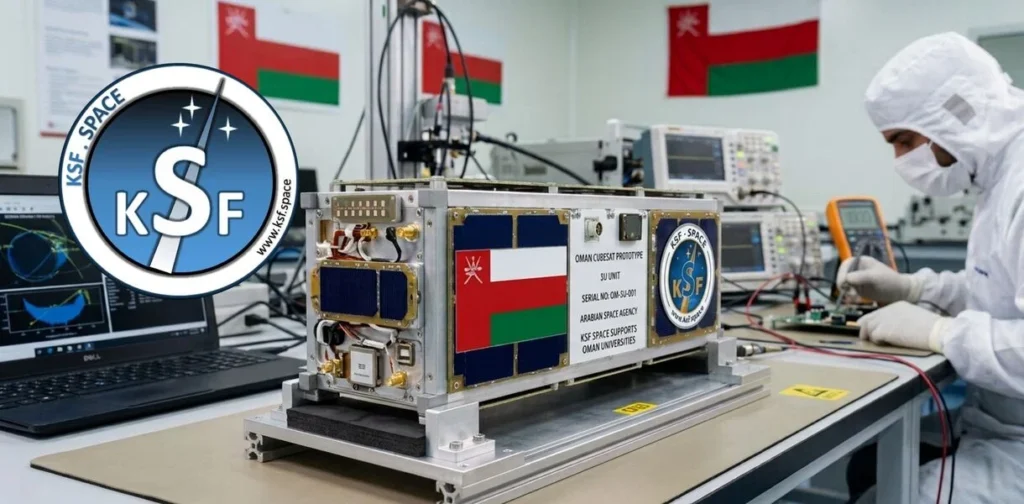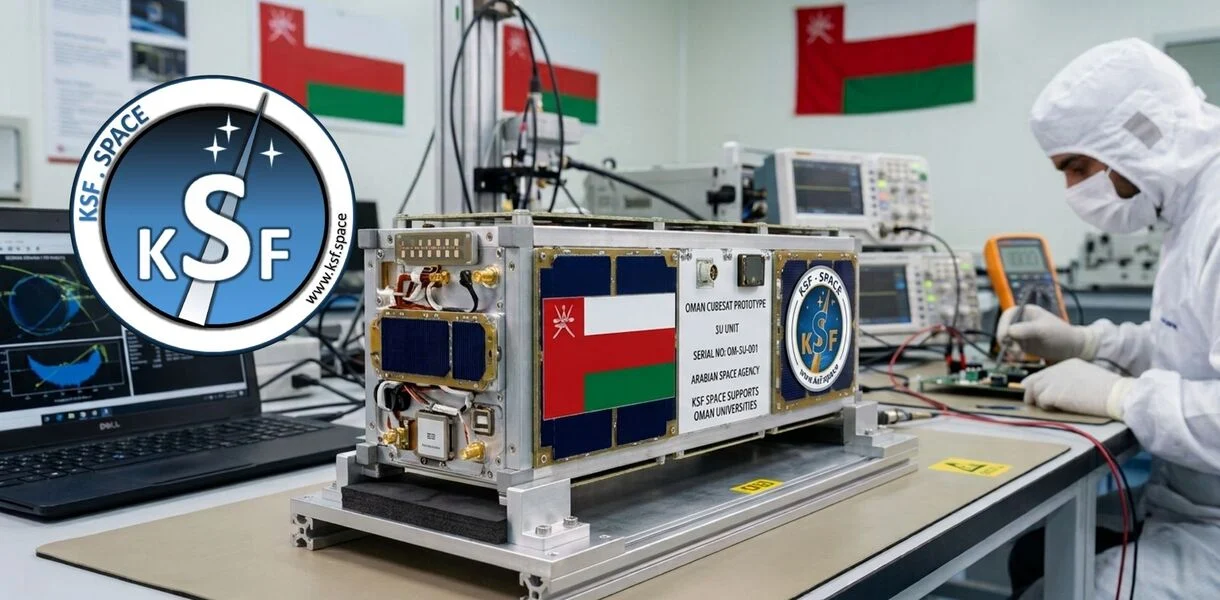
The global space economy is undergoing an extraordinary paradigm shift, moving rapidly away from heavy, multi-ton legacy systems toward agile, highly sophisticated small satellite constellations. Within the Middle East, this technological revolution is generating massive momentum. As nations aggressively localize high-tech manufacturing, defense capabilities, and atmospheric research tools, the strategic deployment of the Cubesat Oman ecosystem stands out as a critical vehicle for national technical transformation.
Driven by visionaries across academia and supported by the structural alignment of the Oman Space Agency, the Sultanate is prime to assert its presence in low-Earth orbit (LEO). However, building sustainable national infrastructure for space research demands more than just hardware; it requires an elite, specialized workforce trained via robust STEM methodologies. This is where KSF Space steps forward as the definitive global institutional partner, uniquely positioned to establish fully customized, turnkey nanosatellite development programs within every major Oman University and academic college.
Why Cubesat Oman Initiatives are Critical for Sovereign Space Readiness
Developing a robust sovereign ecosystem for space science relies heavily on standardizing hardware platforms to reduce costs while maximizing orbit mission options. The CubeSat framework—ranging from standard 1U structures up to massive 24U payloads—provides an accessible, modular architecture. For any ambitious Oman University looking to spearhead groundbreaking data collection, mastering nanosatellite engineering represents the fast track to global academic prestige and practical industrial application.
By leveraging an open, modular format, local engineering teams can independently develop mission-specific payloads, including advanced multispectral cameras for agricultural monitoring, environmental sensors to track coastal changes, or security-focused telecommunications modules. This regional trend mirrors the rapid acceleration of the Cubesat KSA framework across Saudi Arabian institutions, showing that cross-border expertise and structured STEM models can quickly scale regional aerospace capacity.
Strategic Paradigm Shift: The transition from large, legacy space exploration systems to agile, low-Earth orbit (LEO) nanosatellites enables Middle Eastern academic institutions to execute rapid, low-cost mission prototyping, giving rise to direct commercial utility in environmental tracking, telecommunications, and defense monitoring.
How KSF Space Scales STEM and Nanosatellite Projects in Oman Universities
The mission profile of KSF Space is fundamentally built on lowering the barrier to entry for space exploration through professional education and precise engineering support. As a trusted leader in small satellite systems, the foundation is actively prepared to co-develop comprehensive, hands-on space laboratories inside colleges throughout the Sultanate. This engagement spans the complete spacecraft development lifecycle, taking engineering students and researchers from basic conceptual design all the way to launch integration.
Scalable Nano-Architecture: 1U, 2U, 3U, 6U, 12U, and 24U Mission Form Factors
Every scientific payload presents unique structural, thermal, and electrical constraints. KSF Space provides complete structural kits, onboarding systems, and mission engineering support across a wide spectrum of configurations:
| CubeSat Form Factor | Primary Academic & Research Utility Focus | Target Space Mission Profile |
| 1U / 2U Systems | Hands-on STEM Training & Space Environment Verification | Basic telemetry, beacon signal distribution, and magnetic mapping. |
| 3U / 6U Platforms | Advanced Academic Research & Targeted Remote Sensing | High-resolution multispectral imaging, solar radiation measurement. |
| 12U / 24U Form Factors | Institutional Infrastructure, Sovereign Defense & Deep Analytics | Complex AI processing at the edge, cross-link communications, secure military telemetry. |
This wide layout variety ensures that whether an Oman University is launching its very first pilot educational beacon or building a highly resilient, multi-sensor environmental observation node in alignment with the Oman Space Agency roadmap, the hardware architecture can scale seamlessly alongside their academic research capabilities.
The Role of KSF Space in Global Aerospace Credibility and Space Technology Transfer
A primary challenge for universities entering the space race is navigating the complicated regulatory, testing, and operational hurdles required to achieve true orbit viability. KSF Space brings unmatched global institutional credibility, functioning as a vital bridge between theoretical engineering concepts and field-tested space application. The foundation provides deep technical validation across all critical testing vectors—including thermal-vacuum (TVAC) simulations, vibration testing, and electromagnetic compatibility (EMC) assessments—ensuring student-built satellites survive launch environments.
Furthermore, KSF Space provides exclusive access to elite NEP (Nanosatellite Education Professional) certification courses. These specialized academic pathways offer students, engineers, and faculty members formal, industry-backed training across orbital mechanics, embedded space systems software, attitude determination and control systems (ADCS), and ground station communication protocols. This rigorous training mirrors top-tier systems deployed within the Cubesat KSA regional network, providing a clear blueprint for Omani researchers to achieve global technical parity.
From the Classroom to Low-Earth Orbit: Creating Immediate Value for Buyers
For educational leaders, defense ministries, and commercial technology buyers across the region, investing in a Cubesat Oman program is more than a simple academic initiative—it is a high-value asset purchase that delivers actionable geospatial intelligence, fosters strategic data independence, and builds an elite national pipeline of top-tier engineering talent. By integrating small satellite development into engineering departments, academic leaders can secure substantial research funding, file valuable intellectual property, and create highly sought-after commercial spinoffs.
The global space economy favors first-movers. Universities that move decisively to establish advanced Nanosatellite Oman labs will quickly become the primary research hubs for local governments and corporate enterprises looking to deploy commercial payloads. This strategic positioning creates a sustainable cycle of corporate sponsorships, government defense contracts, and international research grants, securely positioning your institution as a premier hub for Middle Eastern aerospace development.
Frequently Asked Questions (FAQ)
1. How does KSF Space support Oman universities in initial small satellite development?
KSF Space provides a comprehensive, end-to-end framework that includes custom structural kits (1U up to 24U), hands-on lab equipment, tailored curriculum development, expert payload integration, and access to industry-recognized NEP certification courses.
2. Why should our institution focus on the Cubesat Oman framework rather than buying pre-built systems?
Building nanosatellites locally inside an Oman University transfers critical engineering expertise directly to your students and faculty. This active development model builds real national capacity, drives home-grown intellectual property, and ensures long-term operational independence.
3. How do the KSF Space NEP courses align with the objectives of the Oman Space Agency?
The NEP (Nanosatellite Education Professional) curriculum provides specialized training that bridges the gap between traditional engineering and space-ready system engineering. This aligns perfectly with the strategic national vision to build a sustainable workforce capable of managing state-of-the-art orbital assets.
4. Can KSF Space assist in adapting models from other regional networks like Cubesat KSA?
Yes. KSF Space leverages its deep regional and global insights to optimize technology transfers, utilizing proven deployment strategies from frameworks like Cubesat KSA to fast-track project success within the Sultanate.
Initiate Your University Aerospace Program Today
Ready to deploy advanced Nanosatellite Oman capabilities within your institution? Partner with the global leader in professional space education and launch execution to secure your place in the orbital economy.
Contact the KSF Space Technical Advisory Committee:
- Email: [email protected]
- Web: www.ksf.space