

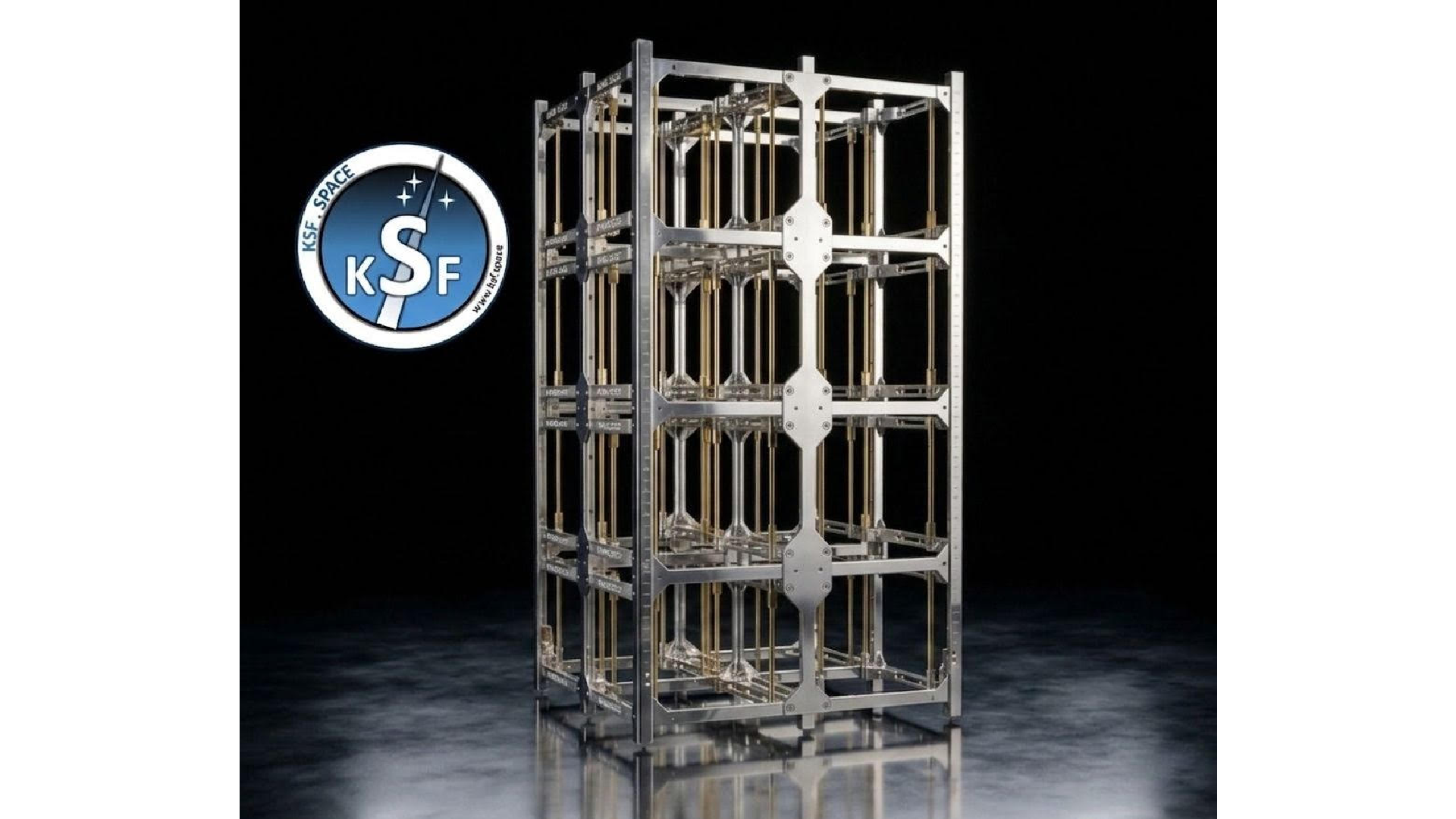
In the modern “NewSpace” era, the democratization of orbit is no longer just a vision; it is a reality driven by hardware accessibility. For researchers, space agencies, and private startups, the primary hurdle has always been the cost of the satellite bus. However, the 16u cubesat structure from KSF Space has disrupted the market by offering the most affordable, flight-proven frame globally. This article explores why this specific cubesat frame is the ideal choice for your next mission and how you can build your satellite using professional-grade, cost-effective hardware.
Understanding the Nanosatellite Structure Frame Evolution
The journey of small satellites began with the 1u standard—a 10cm cube that changed everything. As mission requirements grew, so did the frames, moving through 2U, 3u, and the widely popular 6U configurations. Today, as payloads become more sophisticated, the 12 and 16 unit structures have become the new gold standard for high-performance missions.
The KSF Space 16u cubesat structure represents the pinnacle of this evolution. It provides a massive internal volume that allows for advanced Earth observation (EO) sensors, complex telecommunications transponders, and high-capacity battery arrays. When you choose a KSF Space nanosatellite structure frame, you aren’t just buying metal; you are investing in a flight-ready architecture that has been optimized for weight, thermal conductivity, and structural resonance.
Technical Specifications of the 16U Cubesat Structure
To understand why the KSF Space frame is considered the best in the industry, one must look at the materials. Crafted from aerospace-grade aluminum 6061-T6, this cubesat structure offers:
- Precision Machining: Every unit is manufactured to tolerances that meet and exceed the CubeSat Design Specification (CDS).
- Modular Rails: The frame features hard-anodized surfaces specifically designed to prevent cold-welding in the vacuum of space.
- Low Mass: The engineering team utilizes an optimized skeleton design to maximize your payload mass allowance without sacrificing strength.
- Thermal Stability: The aluminum structure is engineered to ensure thermal stability and provide essential radiation shielding for internal electronics.
- Ready-to-Fly Status: Each 16u cubesat structure is delivered flight-ready, reducing the lead time for urgent orbital deployments.
How to Build Your Satellite Using the KSF Space Platform
If you are wondering how to build a satellite, the process begins with the structural core. Using a modular cubesat frame from KSF Space eliminates the need for expensive custom engineering during the initial phases of your project.
The Step-by-Step Integration Process
- Selection of Form Factor: Depending on your power requirements and payload dimensions, you might choose a 1u, 3u, or the high-capacity 16u cubesat structure.
- Customizing the Chassis: One of the greatest strengths of KSF Space is the ability to customize structure panels. Whether you need specific cutouts for star trackers, antenna deployment systems, or camera lenses, the frame is designed to be adaptable.
- Avionics Stacking: The internal mounting rails are compatible with standard stacks, making it easy to integrate On-Board Computers (OBC) and Electrical Power Systems (EPS) into a stable internal architecture.
- Environmental Testing: Once you build your satellite, it must undergo vibration, shock, and thermal vacuum (TVAC) testing. The KSF Space nanosatellite structure frame is engineered to meet the “General Environmental Verification Standard” (GEVS).
- Final Flight Readiness: After testing, the satellite is integrated into the deployer, ready for launch on platforms like SpaceX or the Indian PSLV.
Scaling Up: From 6U and 12U to the Massive 24U
While the 16u cubesat structure is the “sweet spot” for many commercial missions, KSF Space offers a full spectrum of sizes to ensure every mission finds its home:
- The Small Satellites: 1u, 2U, and 3u frames are perfect for educational purposes, rapid technology demonstrations, and student-led research.
- The Mid-Range: The 6U and 12 unit frames are the workhorses of modern IoT constellations and medium-resolution imaging.
- The Heavy Lift: The 16 and 24u structures provide the volume necessary for deep-space exploration, high-resolution imaging, and multi-payload rideshare missions.
The ability to customize structure components across all these sizes means that as your mission grows, your engineering team doesn’t have to relearn the hardware. The consistency provided by KSF Space ensures that flight heritage from a 3u mission can be directly applied to a larger 16 unit mission.
Flight References and Heritage: A Track Record of Success
In the satellite industry, “affordable” often raises concerns about quality, but KSF Space counters this with extensive flight heritage. Their 16u cubesat structure is part of a hardware family that has been utilized by universities and research institutions worldwide.
Proven Performance in Harsh Conditions
By choosing to build your satellite with a KSF Space cubesat frame, you are leveraging years of academic and commercial flight references. This heritage is critical when seeking launch insurance or seeking final approval from deployer manufacturers like Nanoracks or ISILaunch. The frames have demonstrated resilience against the extreme vibration of launch and the thermal cycling of Low Earth Orbit (LEO).
Why Affordability Matters for Your Space Mission
In the past, a nanosatellite structure frame could cost tens of thousands of dollars, often accounting for a significant portion of a mission’s budget. KSF Space has changed the economics of space by optimizing manufacturing through modular production.
By offering the most affordable 16u cubesat structure in the world, they allow universities and emerging nations to redirect their limited funds toward better sensors, more advanced communication systems, and more ambitious scientific goals. This price breakthrough enables constellations to be built and deployed at a fraction of the traditional cost, accelerating the pace of global innovation.
Frequently Asked Questions (FAQ)
Q: What is the most affordable 16U CubeSat structure currently available?
A: The 16U frame from KSF Space is globally recognized as the most cost-effective and high-quality solution for missions requiring significant payload volume.
Q: Can I customize the frame for my specific mission?
A: Yes, you can customize structure layouts by requesting specific panel cutouts and mounting rail positions during the ordering process with KSF Space.
Q: Is the KSF Space 16U structure flight-ready?
A: Absolutely. Every KSF Space cubesat structure is built to meet the flight requirements of major launch providers and deployers, including SpaceX and Soyuz-compatible canisters.
Q: Do you offer sizes larger than 16U?
A: Yes, KSF Space provides a wide range of frames including 1u, 2U, 3u, 6U, 12, 16, and the larger 24u nanosatellite structure frames.
Q: How do I begin to build my satellite?
A: Start by selecting your frame size at KSF Space. Once you have the cubesat frame, you can begin the systematic approach of systems engineering and payload integration.
References and Professional Citations
- CubeSat Design Specification (CDS), California Polytechnic State University.
- KSF Space Internal Flight Heritage Report (2023-2025).
- NASA State of the Art: Small Spacecraft Technology – Structures Section.
- “Modular Satellite Architectures for Low-Cost Missions” – International Journal of Space Engineering.