

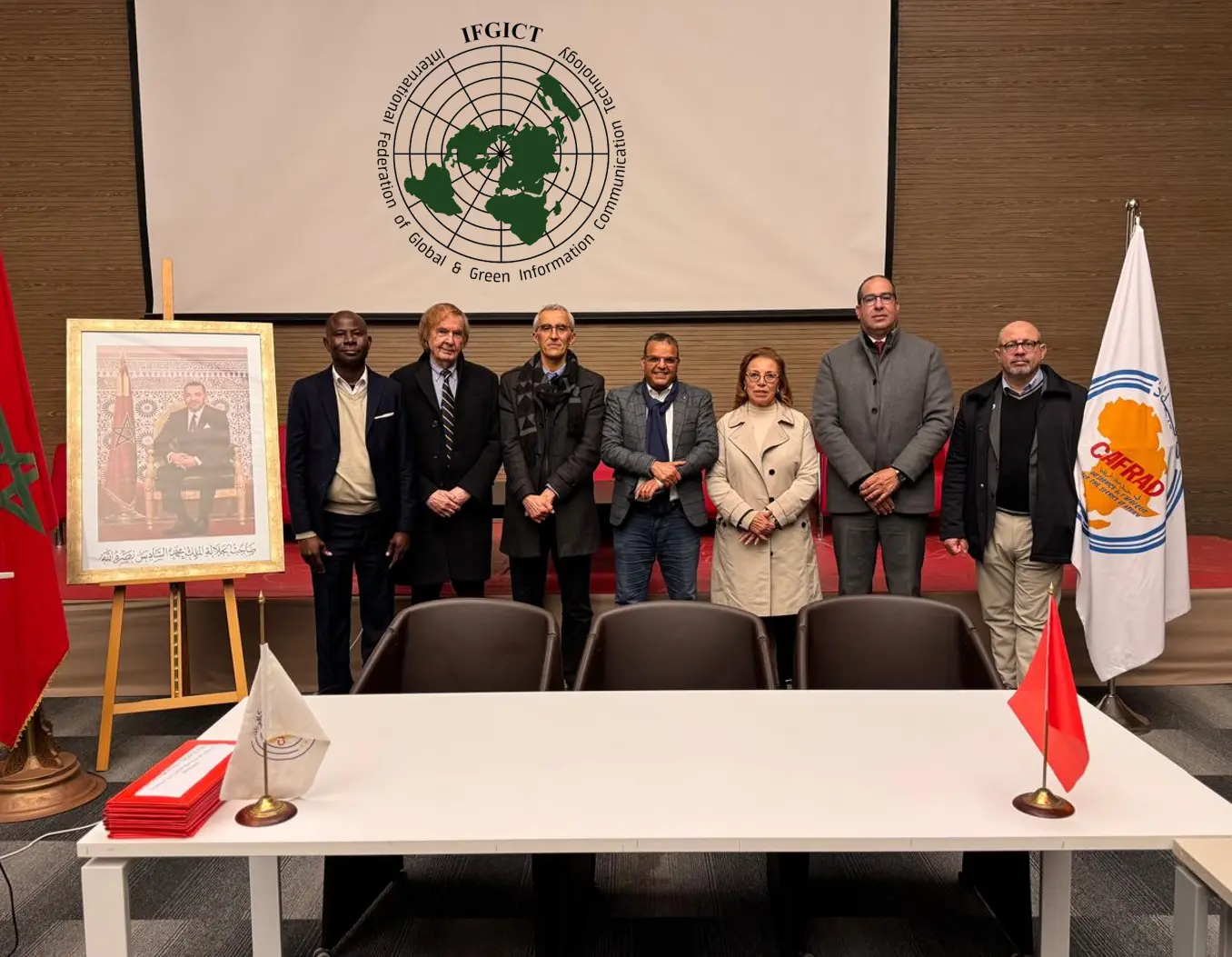
The landscape of African infrastructure and governance is undergoing a seismic shift toward transparency and intelligence. IFGICT has officially announced a landmark initiative: the African Committee for Sustainable Development. Integrated directly within IFGICT, this body is set to redefine how sustainable and intelligent projects are governed across the continent.
Led by Dr. LKAIHAL Mhamed, IFGICT’s Head of African Affairs, the project focuses on a critical pillar of growth—modernizing the governance infrastructure of African states and local authorities.
A New Standard for Transparency: IPSAS Integration
At the heart of this initiative is the development of rigorous transparency standards. By basing project development on IPSAS (International Public Sector Accounting Standards), IFGICT ensures that African development projects meet global benchmarks for financial accountability.
This approach serves two primary goals:
- Strategic Support: Assisting African decision-makers in accelerating sustainable projects with data-backed confidence.
- Global Alignment: Ensuring projects resonate with the United Nations 2030 Agenda and the African Union Agenda 2063.
Morocco: The Catalyst for South-South Cooperation
The initiative was birthed in the Kingdom of Morocco, a nation that has emerged as a continental leader in territorial intelligence and innovation. Morocco’s involvement isn’t just about technical expertise; it represents a profound political will to foster South-South cooperation. By sharing its advanced models for sustainable development, Morocco and IFGICT are empowering neighboring nations to build resilient, tech-forward governance structures.
A Pan-African Coalition of Excellence
This isn’t a solo endeavor. The African Committee for Sustainable Development brings together a diverse powerhouse of stakeholders, including:
- Former Ministers & Diplomats: Providing high-level policy guidance.
- International Experts & Universities: Infusing the project with cutting-edge research.
- Business Federations & Foundations: Ensuring economic viability and social impact.
Why This Matters for the Future of Africa
As urbanization and digital transformation accelerate, the “old way” of managing public projects is no longer sufficient. IFGICT’s new framework introduces Territorial Intelligence, a method that uses data and innovation to manage local authorities more efficiently. This modernization is the key to unlocking the economic potential of African states while preserving environmental integrity.
“The modernization of governance infrastructure is not just a technical upgrade; it is the foundation of African sovereignty and sustainable prosperity.” — The African Committee for Sustainable Development Strategy